Watery or Dry Eyes: Tear-Film Symptoms and Possible Causes
Eyes that water constantly are often dry. It sounds backwards, but the tear film works like a three-layer film of oil, water and mucus — trouble in any layer causes symptoms.
Clear information to help you prepare for a conversation with an eye-care professional.
✳ Care explained with context
A clearer place to start
Understand the concern. Choose your next step.
Use this guide to learn what may be assessed and what questions to raise. It is educational information, not a diagnosis.
The guide
Watery or Dry Eyes: Why Tearing and Dryness Happen Together
01
How the tear film works
A thin oil layer slows evaporation, a water layer nourishes, and a mucus layer spreads the film evenly. Instability in any layer causes burning, grittiness, fluctuating blur — and paradoxically, watering.
02
Common triggers
Screen use (we blink less), air conditioning, Delhi's dust and pollution, ageing, certain medicines and autoimmune conditions such as Sjogren's syndrome all affect the tear film.
03
When watering is a blockage
If tears stream down your cheek constantly, the drainage pathway (punctum and tear ducts) may be narrow or blocked — a different problem needing a different treatment.
04
Evaluation and management
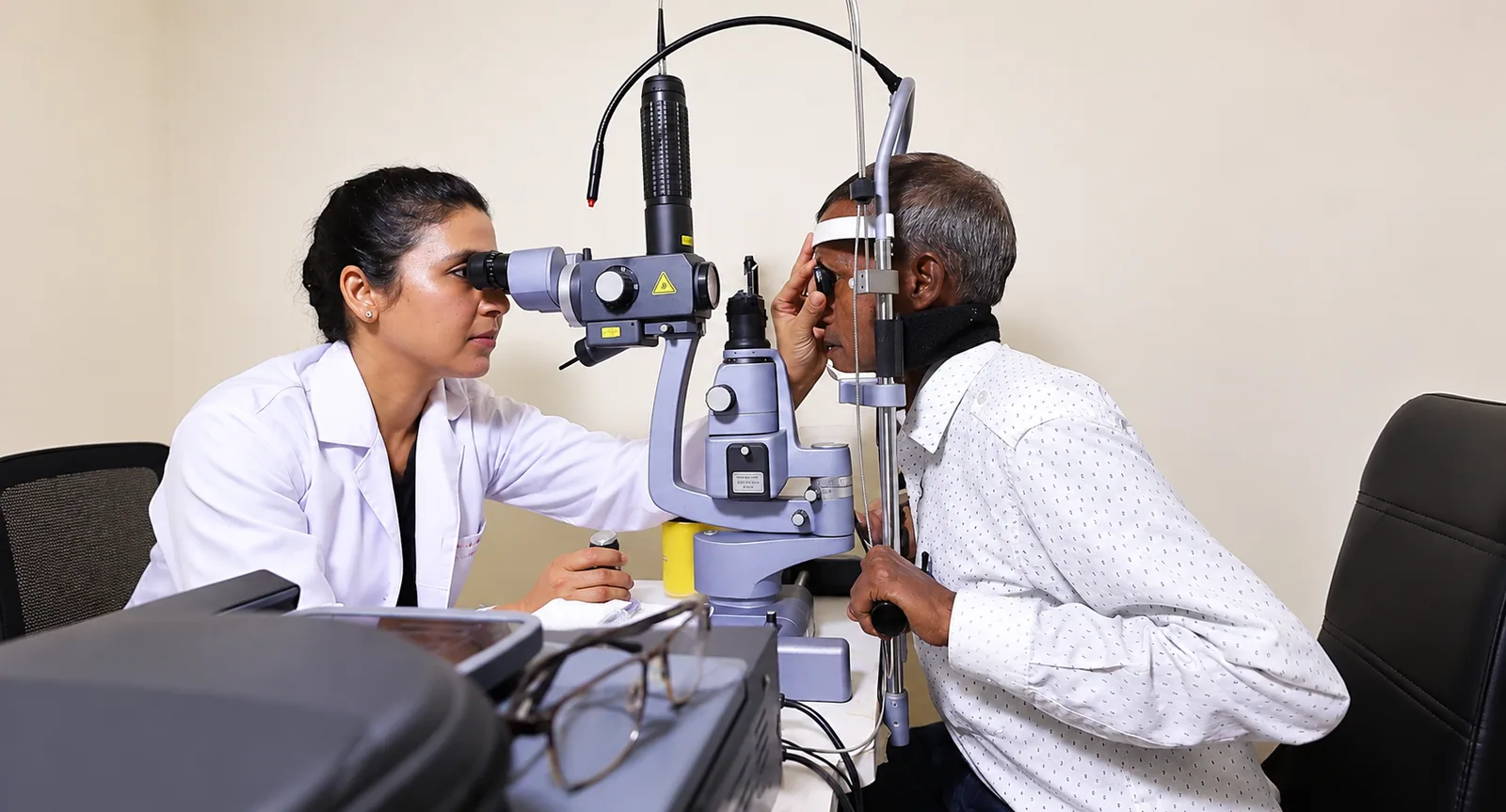
Examination may include tear-film assessment and meibomian gland evaluation. Management ranges from lubricating drops and lid hygiene to punctal plugs or minor procedures for blocked drainage — decided by cause, not guesswork.
!
Do not wait
Please seek urgent assessment if you have
Watering with a painful red eye or discharge
Constant tearing from one eye with swelling near the nose
Dry eyes with joint pain or dry mouth (possible autoimmune cause)
These symptoms may need urgent care. Contact the hospital to check availability; if you cannot promptly reach an eye-care team, go to the nearest emergency service.