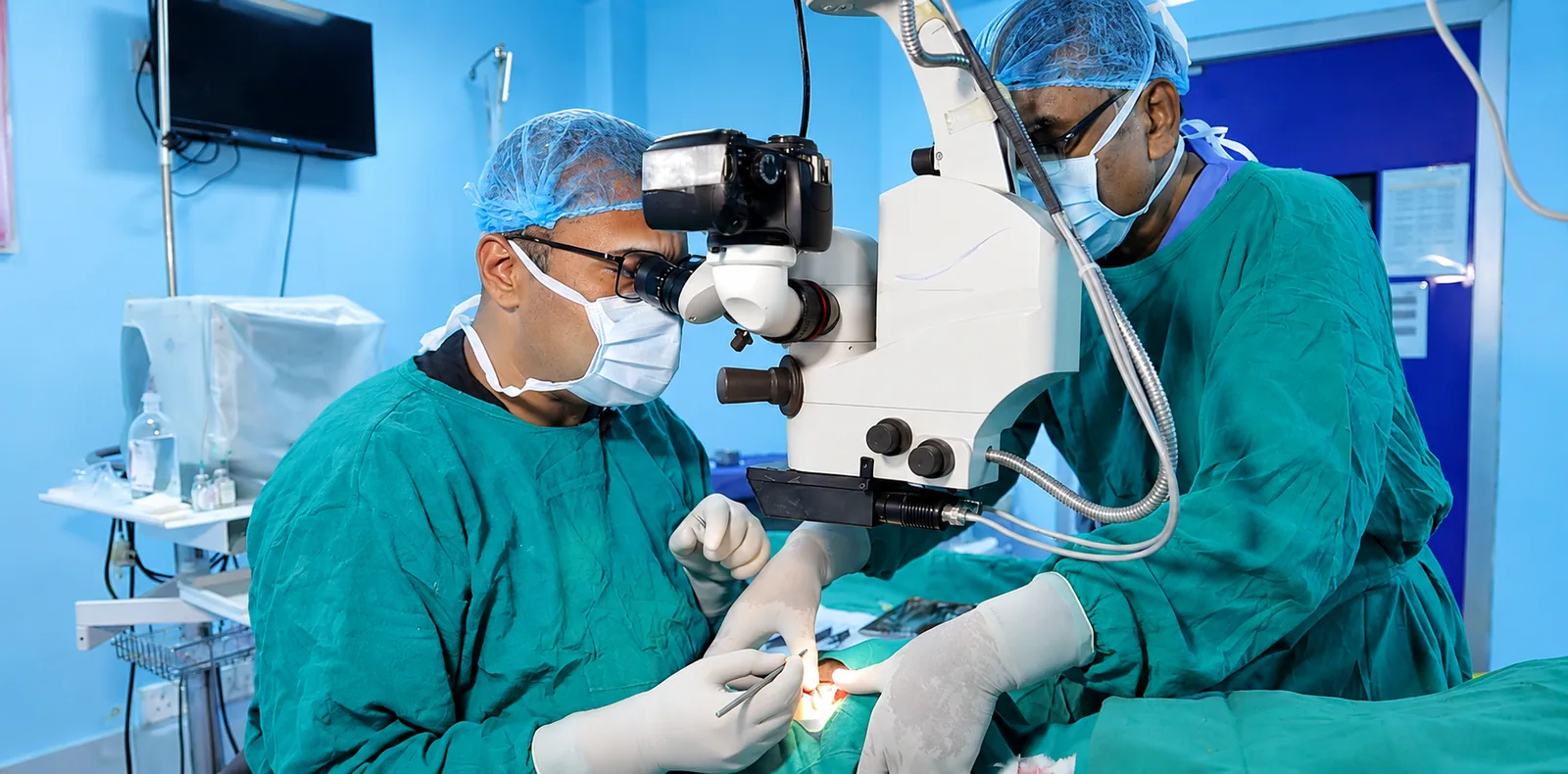
Cataract Surgery: Lens Options, Candidacy and Questions
A cataract is clouding of the eye’s natural lens. Surgery may be discussed when the resulting vision changes interfere with daily activities; the examination and the person’s preferences guide that decision.
Clear information to help you prepare for a conversation with an eye-care professional.
✳ Care explained with context
A clearer place to start
Understand the concern. Choose your next step.
Use this guide to learn what may be assessed and what questions to raise. It is educational information, not a diagnosis.
The guide
Cataract Surgery in Delhi: Options, Candidacy & Honest Expectations
01
What a cataract actually is
The natural lens inside your eye gradually becomes cloudy with age. Vision blurs, colours dull, glare increases at night. Cataract is not a film over the eye and it is not reversible with drops.
02
When surgery is appropriate
Surgery is considered when the cataract meaningfully affects your daily life — reading, driving, work — and glasses no longer help. The decision is yours, made with the surgeon after examination; we never push early or premium options without need.
03
How surgery may work
A common cataract procedure uses phacoemulsification to remove the cloudy lens and place an artificial intraocular lens (IOL). The technique, anaesthesia and care setting depend on the eye and the surgeon’s plan.
04
Lens choices, honestly explained
Monofocal lenses are designed for one main focus distance. Toric designs can correct selected astigmatism. Some multifocal or extended-depth-of-focus lenses aim to help across more distances, but can have trade-offs such as glare or halos. Suitability and expected glasses use should be discussed for your eyes.
05
Recovery and follow-up
Recovery instructions and timing vary. Follow the written drop, activity and review plan from the treating team, and contact them if a new or worsening symptom appears. Ask in advance which complications are possible and how to get urgent advice.
!
Do not wait
Please seek urgent assessment if you have
Sudden vision drop in an eye known to have cataract — this needs same-day assessment
These symptoms may need urgent care. Contact the hospital to check availability; if you cannot promptly reach an eye-care team, go to the nearest emergency service.
These answers are a starting point. Your clinician can advise based on an examination.
Is cataract surgery painful?+
The anaesthesia plan and sensations vary. Ask the surgeon what is planned for you and how discomfort will be managed.
How long does the surgery take?+
Timing depends on the eye, procedure and clinic arrangements. Ask the treating team how much time to allow for preparation, the procedure and observation.
Can cataract come back after surgery?+
The artificial lens does not cloud. A thin membrane behind it can haze over time (posterior capsule opacification) and is cleared in minutes with a painless laser procedure.
When can I return to work?+
That depends on the procedure, healing and the visual and physical demands of your work. Follow the timeframe your surgeon gives you.
Can anyone guarantee a particular result?+
No individual result should be promised before an examination. Ask which factors in your eye may affect the expected benefit and what limitations could remain.
Jain Eye Hospital & Laser Centre
A clear next step starts with a conversation.
Book an appointment or contact the hospital if you need help planning your visit.