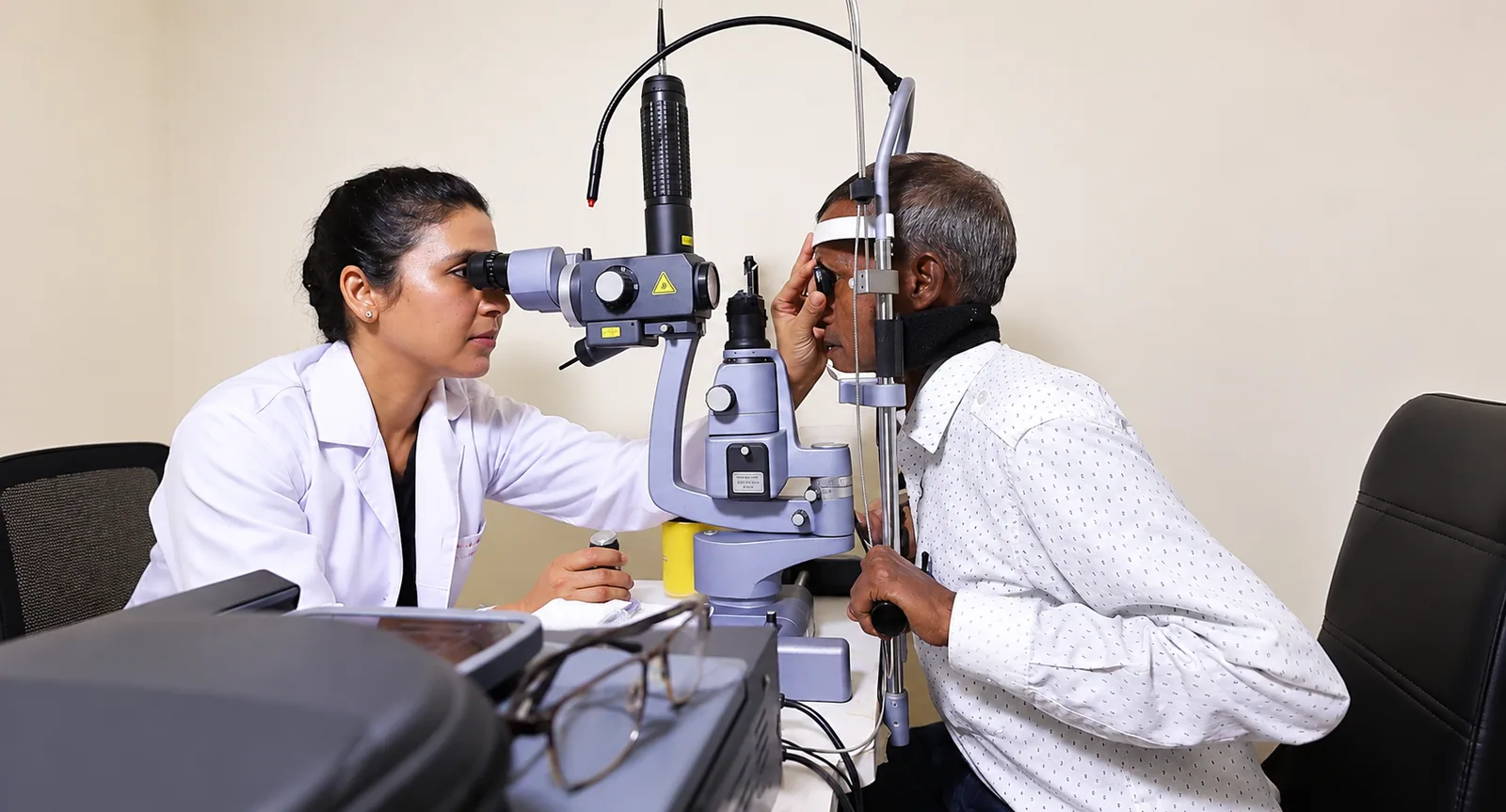
Squint Care: Eye Alignment Assessment and Treatment Options
A child’s eye turn and new double vision in an adult need different assessments. A clinician first considers the cause, visual development and alignment before discussing an individual care plan.
Clear information to help you prepare for a conversation with an eye-care professional.
✳ Care explained with context
A clearer place to start
Understand the concern. Choose your next step.
Use this guide to learn what may be assessed and what questions to raise. It is educational information, not a diagnosis.
The guide
Squint Care for Children & Adults: Alignment, Surgery & Double Vision
01
Children: vision and alignment
Glasses, amblyopia treatment or eye-muscle surgery may be discussed depending on the examination. The sequence and goal of care are individual; ask how each step is expected to help your child.
02
Adults: cause before correction
New adult squint signals a search for cause — nerve palsy, thyroid eye disease, decompensated childhood squint. Prisms, botulinum toxin and surgery each have their place after the diagnosis.
03
Cosmetic versus functional
In children squint care is fundamentally about visual development, not appearance. In adults, relieving double vision is usually the priority.
!
Do not wait
Please seek urgent assessment if you have
New double vision with headache or neurological symptoms — seek urgent evaluation
These symptoms may need urgent care. Contact the hospital to check availability; if you cannot promptly reach an eye-care team, go to the nearest emergency service.