Blurry Vision: Possible Causes and When to See an Eye Doctor
Blurry vision is one of the most common reasons people search for an eye doctor in Delhi. It is a symptom, not a diagnosis — and the right specialist depends on where the problem actually sits in your eye.
Clear information to help you prepare for a conversation with an eye-care professional.
✳ Care explained with context
A clearer place to start
Understand the concern. Choose your next step.
Use this guide to learn what may be assessed and what questions to raise. It is educational information, not a diagnosis.
The guide
Blurry Vision: Causes, Warning Signs & the Right Specialist
01
What blurry vision can mean
Your eye works like a camera: the cornea and lens focus light, and the retina converts it into signals for the brain. Blur can come from the focusing system (cornea, lens), the light-sensing layer (retina), the optic nerve, or even general health conditions such as diabetes or uncontrolled blood pressure.
02
Common, non-alarming causes
The most frequent causes are simple: an outdated glasses prescription, dry eyes, early cataract, or eye strain. These are common and usually straightforward to evaluate.
03
Causes that deserve prompt attention
A sudden blur, blur in one eye only, or blur with other symptoms can point to conditions such as retinal detachment, acute glaucoma, corneal infection, diabetic retinopathy, or optic nerve problems. These need timely specialist assessment — not self-treatment.
04
How an ophthalmologist evaluates blur
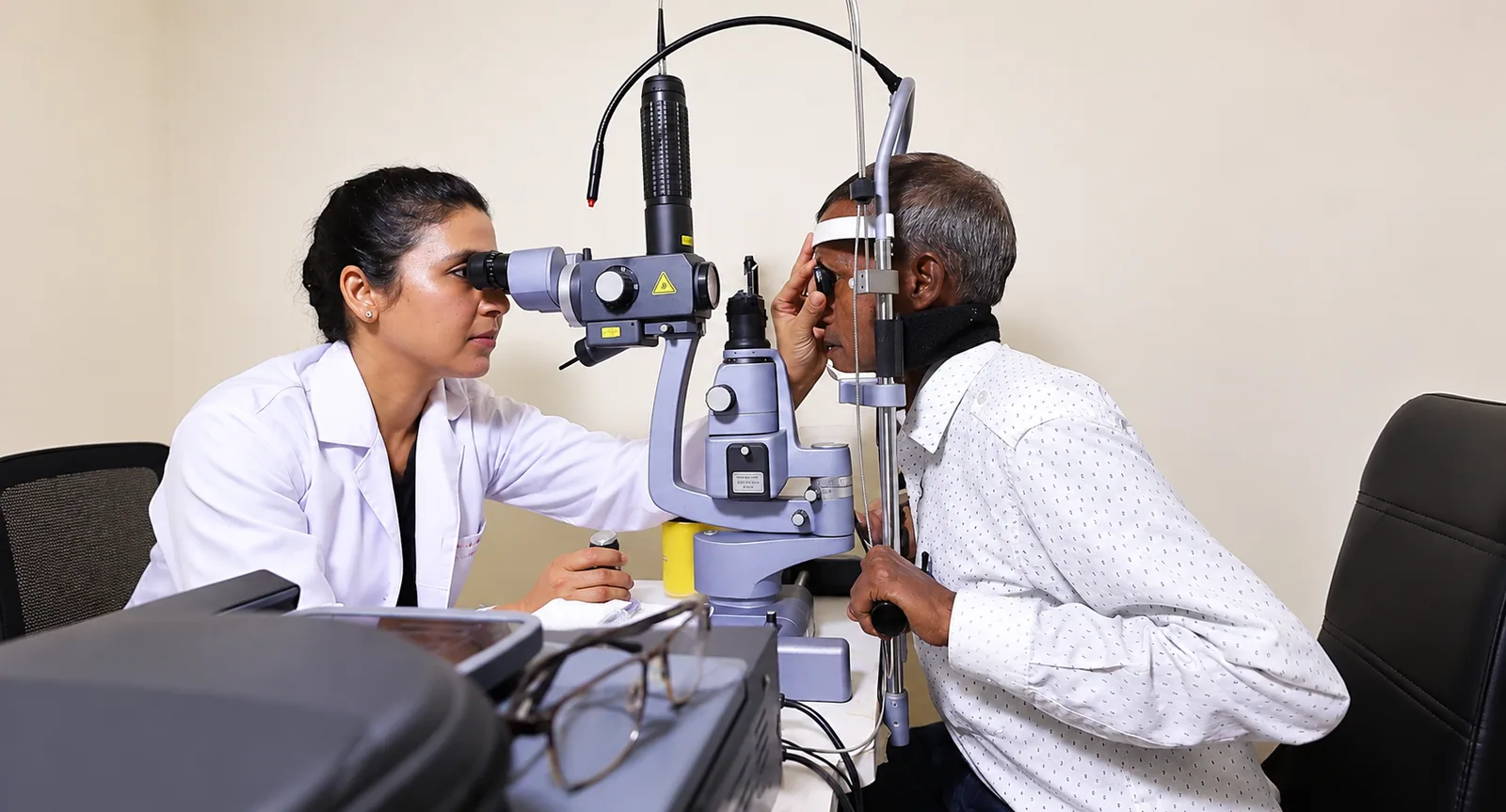
Evaluation typically includes vision testing, refraction (glasses power check), slit-lamp examination of the front of the eye, eye pressure measurement, and — when indicated — a dilated retina examination or imaging such as OCT. The examination pattern follows your symptoms, not a fixed package.
05
Questions worth asking
Is my blur due to a focusing problem or something at the back of the eye? Do I need a dilated examination today? What are my options, and what happens if I wait?
!
Do not wait
Please seek urgent assessment if you have
Sudden vision loss or a dark curtain/shadow across your vision
Blur with severe eye pain, headache, nausea or halos
Blur after eye injury or chemical exposure
New blur with flashes, many floaters, or distortion of straight lines
These symptoms may need urgent care. Contact the hospital to check availability; if you cannot promptly reach an eye-care team, go to the nearest emergency service.
These answers are a starting point. Your clinician can advise based on an examination.
Can staring at screens cause blurry vision?+
Long close-work sessions can be followed by temporary discomfort or fluctuating blur. Take breaks; persistent, sudden, or one-sided blur needs an eye examination. Use eye drops only as advised or according to their label.
Is blurry vision always cataract?+
No. Cataract is common after 50, but blurry vision has many causes from a changed glasses power to retinal conditions. Only an examination can tell.
When is blurry vision an emergency?+
When it starts suddenly, affects one eye, comes with pain, flashes, floaters, or a curtain-like shadow — seek urgent assessment.
Will I need drops that blur my vision at the first visit?+
If a dilated retina examination is needed, the drops blur near vision for a few hours. Bring a companion if possible, and avoid driving yourself home.
Can diabetes cause blurry vision even with good glasses?+
Yes. Diabetes can affect the retina and also cause temporary blur from fluctuating sugar levels. Diabetics need periodic retina screening even without symptoms.
Jain Eye Hospital & Laser Centre
A clear next step starts with a conversation.
Book an appointment or contact the hospital if you need help planning your visit.