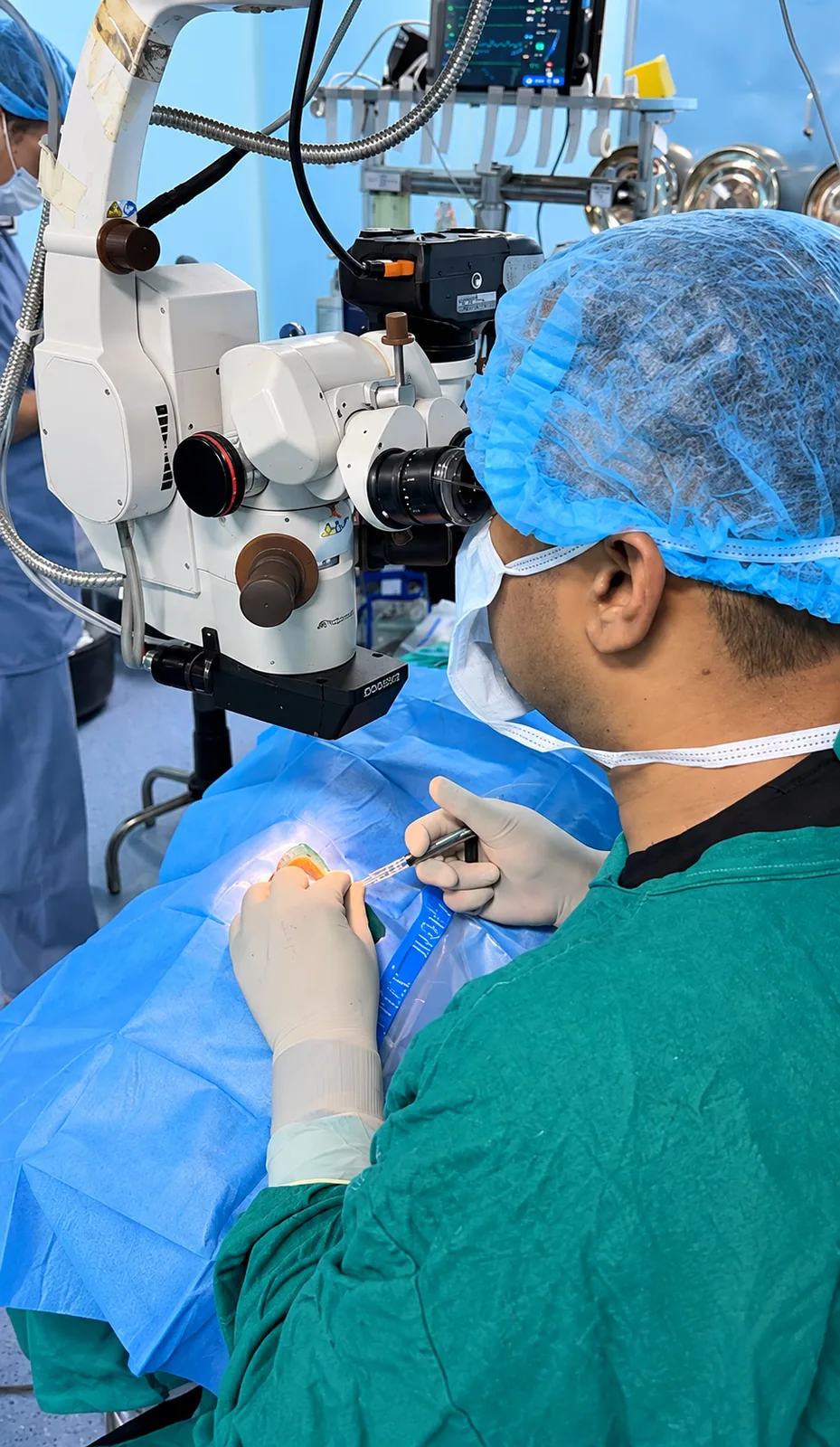
Retina and Vitreous Care: Symptoms, Tests and Treatment
The retina converts light into signals for vision. Some retinal conditions have few early symptoms, while others cause sudden changes. New flashes, many floaters or a shadow need prompt professional assessment.
Clear information to help you prepare for a conversation with an eye-care professional.
✳ Care explained with context
A clearer place to start
Understand the concern. Choose your next step.
Use this guide to learn what may be assessed and what questions to raise. It is educational information, not a diagnosis.
The guide
Retina & Vitreous Care: Detachment, Holes & the Back of the Eye
01
What this sub-speciality manages
Retinal tears and detachment, vitreous haemorrhage, macular problems, diabetic retinopathy, retinal vascular blockages, and inherited retinal conditions.
02
Why prompt assessment matters
A retinal tear may be treated with laser in selected cases. A detachment can need surgery. The clinician determines the treatment from the retinal examination; do not wait if a sudden curtain, flashes or many new floaters appear.
03
Common procedures explained
Laser photocoagulation seals tears or treats proliferative disease. Vitrectomy removes blood-scarred vitreous and repairs detachments. Injections (anti-VEGF/steroid) treat swelling and bleeding from retinal vessels. Each has specific indications and limits.
04
Recovery and follow-up
Aftercare can include positioning, activity limits and repeated examinations, depending on the procedure. The treating team gives individual instructions and explains what recovery can and cannot be expected to achieve.
!
Do not wait
Please seek urgent assessment if you have
New shower of floaters, flashes, or a curtain over vision — same-day assessment
Sudden painless vision drop, especially in diabetics
These symptoms may need urgent care. Contact the hospital to check availability; if you cannot promptly reach an eye-care team, go to the nearest emergency service.